VISUAL GUIDE · Dragon Ball
Reading a Dragon Ball portrait: silhouette, color, and transformation
A change of hair color is easy to spot, but it is only one part of how a Dragon Ball portrait communicates power. The outline of the hair, the position of the shoulders, and the amount of empty space around the figure all change the reading. These three works from the AUKAO archive offer different approaches: a quiet silver-haired profile, a pink-haired glance over the shoulder, and a forward-facing silver-haired portrait. Look at them first as small thumbnails, then open the full images. The large shapes remain legible at a distance; facial expression and surface detail become more important up close.
Goku: an open silhouette
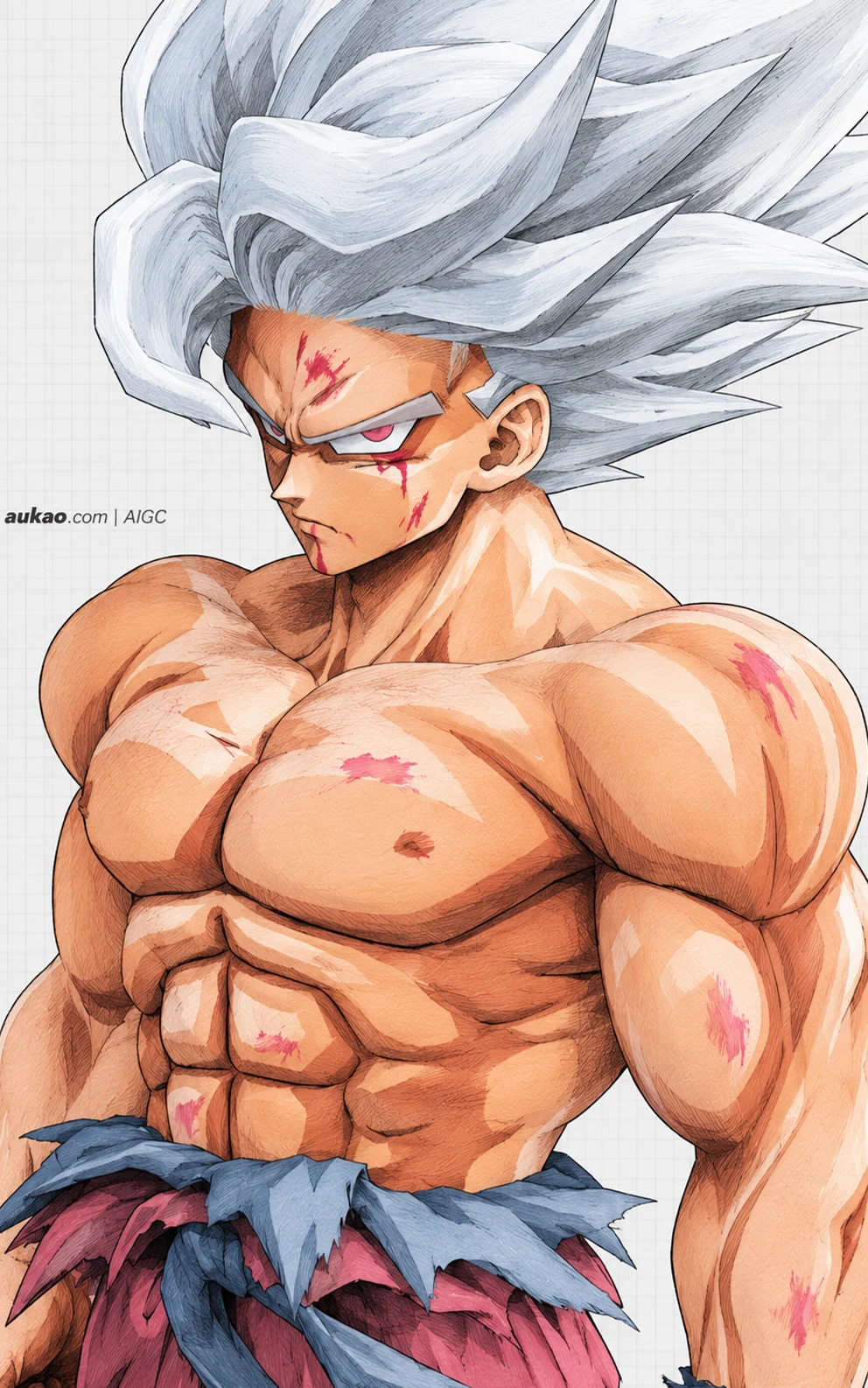
The exposed shoulder creates a broad, simple shape beneath the silver hair. Small red marks interrupt the warm skin tones without becoming the main focus. The body faces across the frame rather than directly at the viewer, giving the portrait a pause between actions.
Open the artwork and reading notes ↗Goku Black: the turn of the head
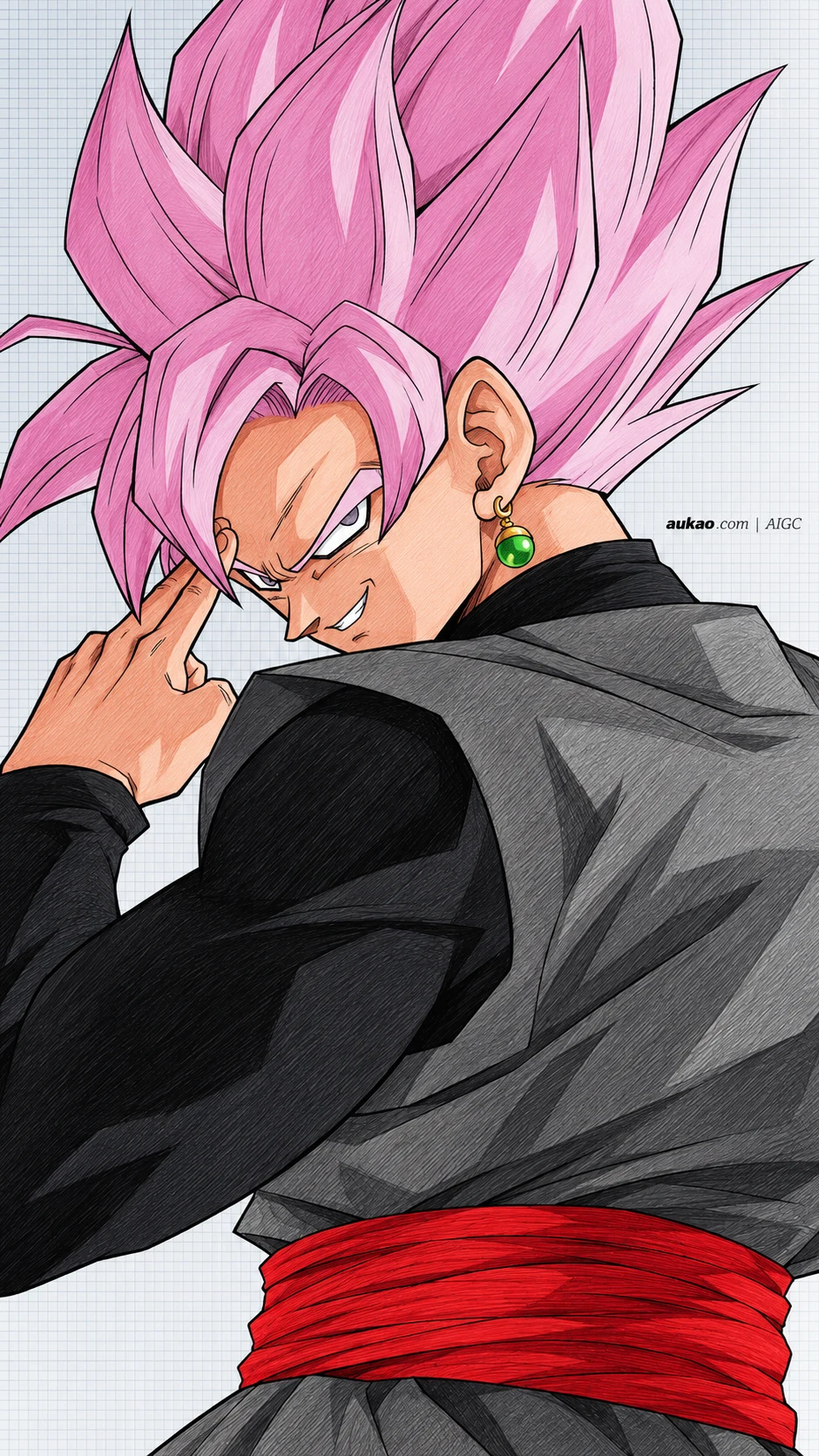
The pink hair is the brightest large shape, but the red sash anchors the lower part of the image. A raised hand sits close to the face, while the dark costume leaves both gestures easy to read. Compare this compact arrangement with the open shoulder in the Goku portrait.
Open the artwork and reading notes ↗Gohan: a vertical emphasis
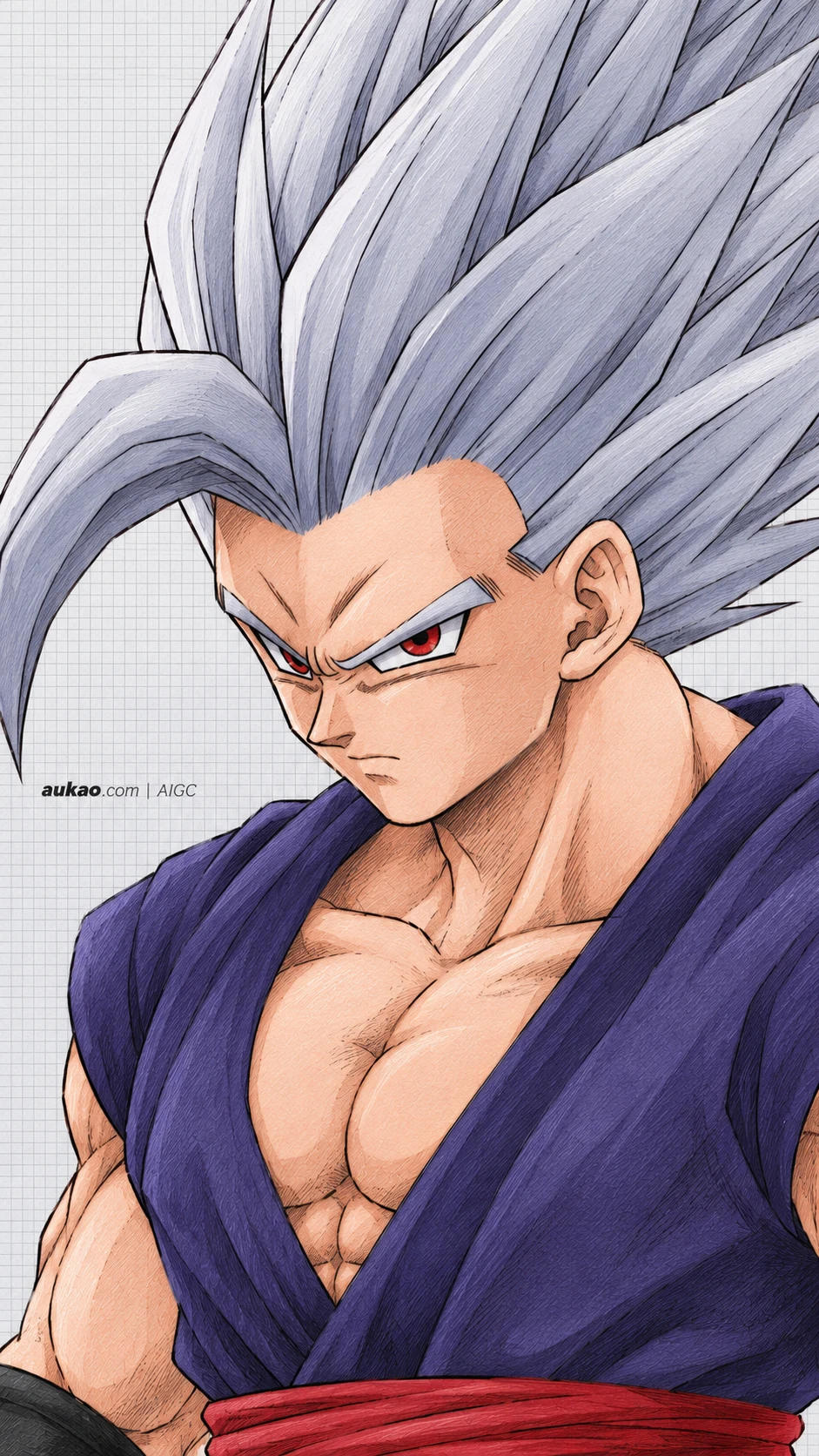
The tall silver hair extends the upward movement of the face. The purple neckline forms a dark frame around the chest, directing attention back toward the eyes. The relatively still pose allows the exaggerated hair shape to carry much of the visual energy.
Open the artwork and reading notes ↗Compare the three works
Compare the paths your eye follows. Goku’s shoulder draws a broad curve through the lower half; Goku Black’s sash and turning torso introduce a diagonal; Gohan’s hair creates a strong vertical. This is why changing the pose and crop can matter as much as changing a transformation color. These images are independent AI-generated interpretations. An unusual feature in this archive should not be treated as evidence of a form or event in the original story. Some other works in the collection explicitly explore imagined transformations.
These notes describe visible features of the finished images. They do not reconstruct prompts, tools, or editing steps for an individual work.
Browse the full collection