VISUAL GUIDE · Naruto
Three Sasuke studies: how framing changes a character portrait
A portrait can feel restrained or confrontational without changing the character. This small selection compares three images of Sasuke through framing, visible skin, and the placement of dark markings. The first presents a relatively open view of the face. The second moves closer, letting hair and markings crowd the composition. The third pulls back to show clothing, a sword, and the figure’s stance. Rather than treating them as interchangeable versions, use the sequence to see what each crop includes and what it asks the viewer to imagine.
Face and collar
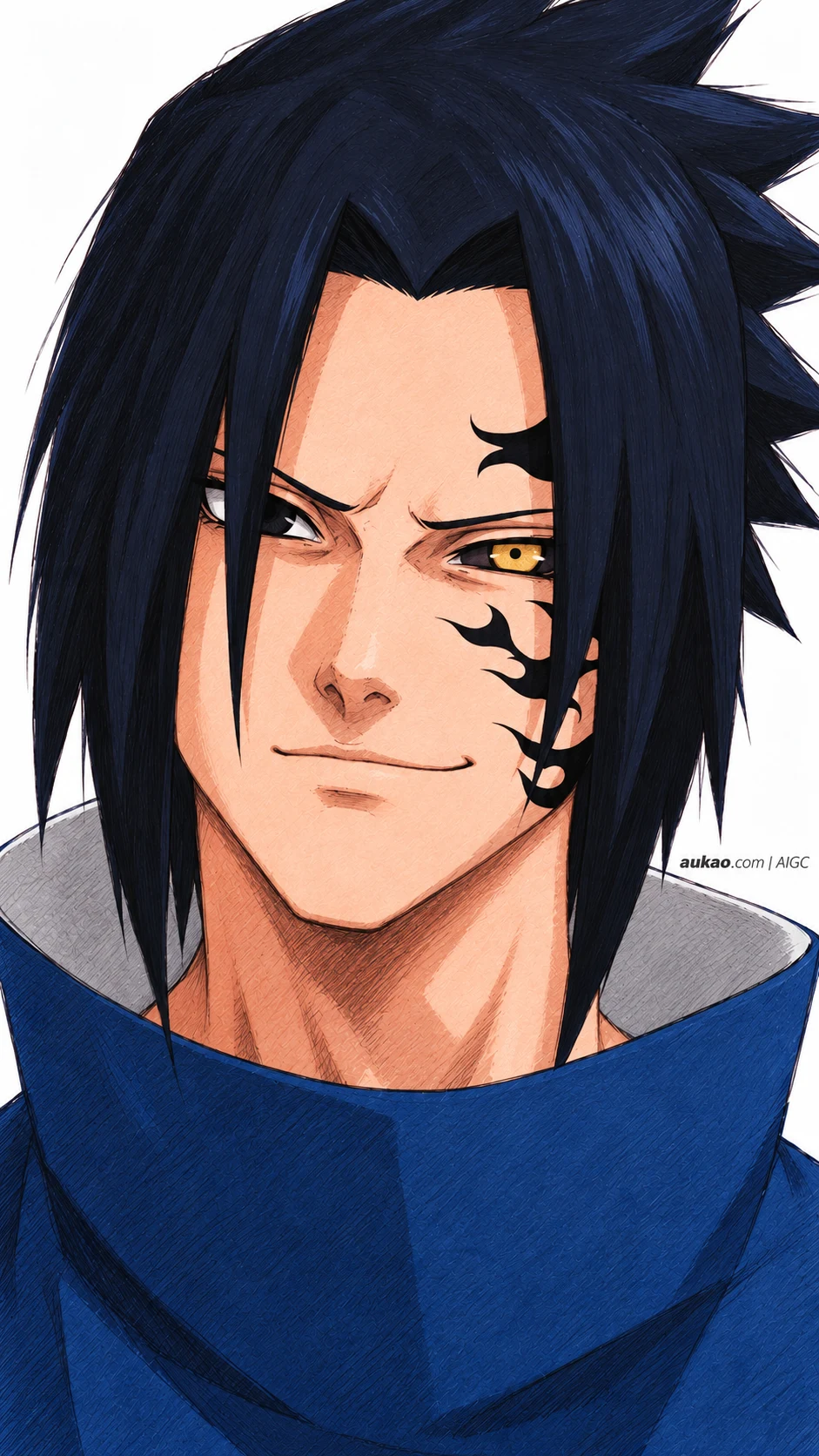
The blue collar provides a broad, calm base beneath the face. Black hair frames the forehead, while the marking remains concentrated on one side. Because the eyes and mouth are both easy to see, small differences in expression stay central to the image.
Open the artwork and reading notes ↗A tighter crop
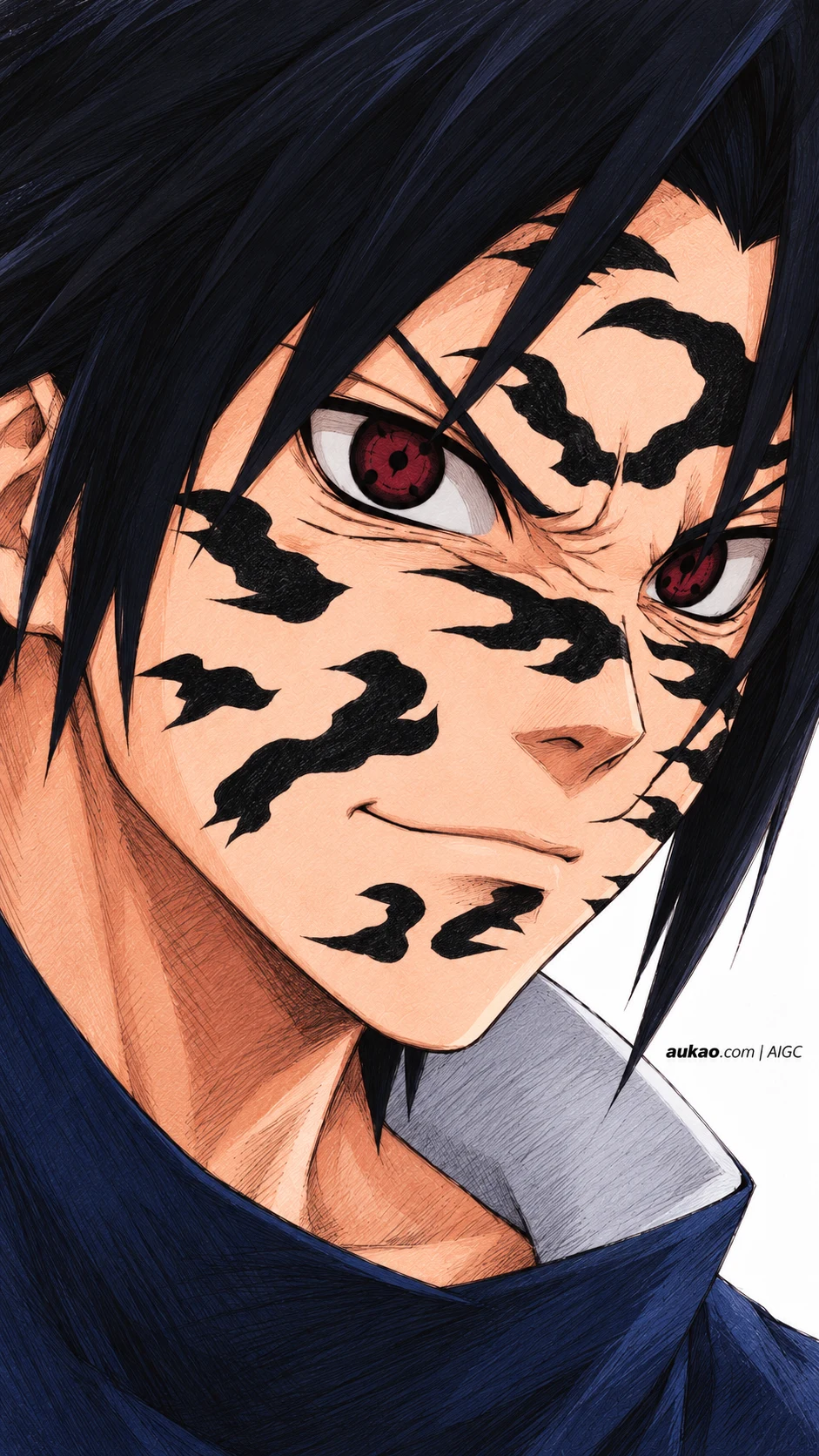
Here the face fills more of the frame and the dark pattern spreads across the cheek. The slanted hair creates a stronger diagonal than in the first study. The red eye becomes a small, high-contrast focus within a much larger pattern of dark shapes.
Open the artwork and reading notes ↗The figure in context
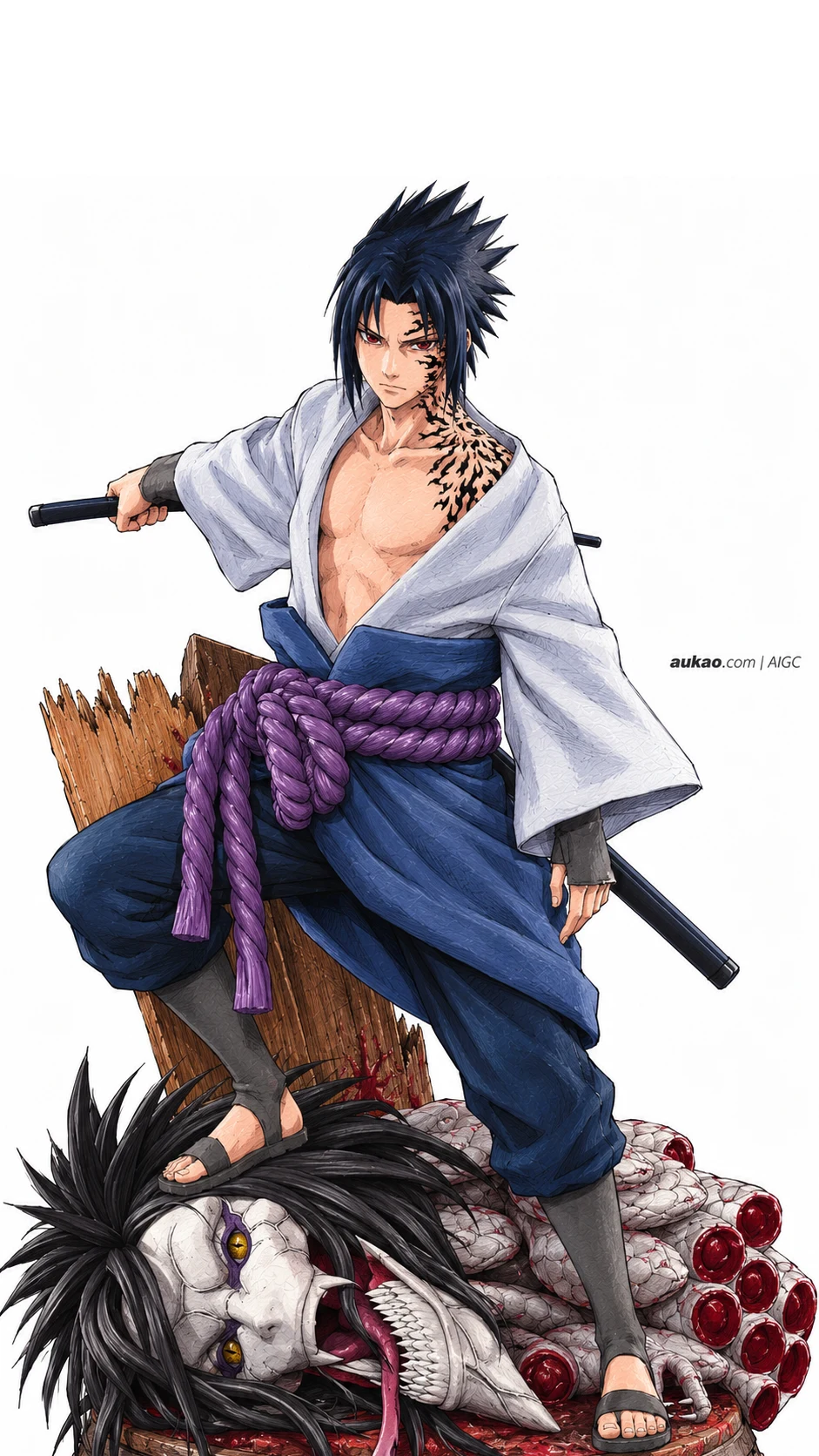
The wider view gives the purple rope belt and open white shirt room to establish the outfit. The sword and extended arm carry the gaze outward. The detailed base beneath the figure adds a narrative suggestion that the close portraits do not provide, without identifying a particular story scene.
Open the artwork and reading notes ↗Compare the three works
Try covering everything below the chin in the wider image. Much of its distinctive information disappears: the belt, the sword, and the relationship between the feet and the base. Conversely, the tight crop retains its intensity even without the costume. This comparison shows a useful trade-off in character illustration. Close framing gives facial details more weight, while a wider view communicates posture and setting. The markings and arrangements here are visual features of these fan works, not a reference guide to exact canonical designs.
These notes describe visible features of the finished images. They do not reconstruct prompts, tools, or editing steps for an individual work.
Browse the full collection