VISUAL GUIDE · Transformers
Reading robot shapes: three approaches to mechanical character art
Mechanical figures can become difficult to read when every panel competes for attention. In this selection, large color blocks and recognizable outlines organize the smaller details. Swoop uses an extended head shape and a narrow torso. Grimlock has a broad yellow chest and heavy limbs. Optimus Prime is framed from below, with the red chest and blue head placed high in the composition. Compare the outer contour before following the lines inside the armor. This separates the overall design from the generated surface texture.
Swoop: narrow shapes and a crest
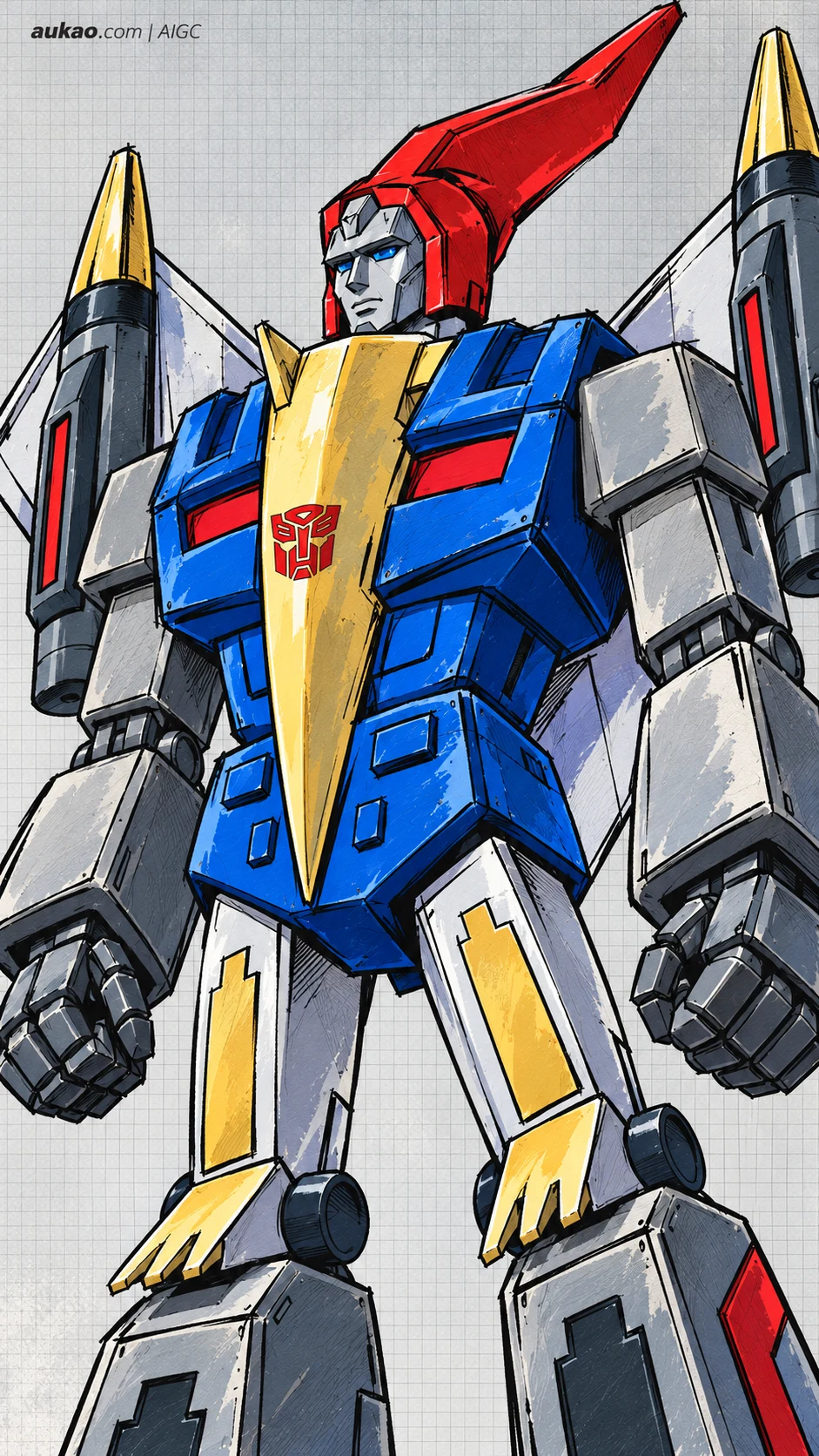
The long red crest and pointed side structures establish an angular outline. Blue panels surround a narrow gold center, making the torso feel more elongated than the other two figures. The pale background leaves the outer edges clearly visible.
Open the artwork and reading notes ↗Grimlock: a broad chest
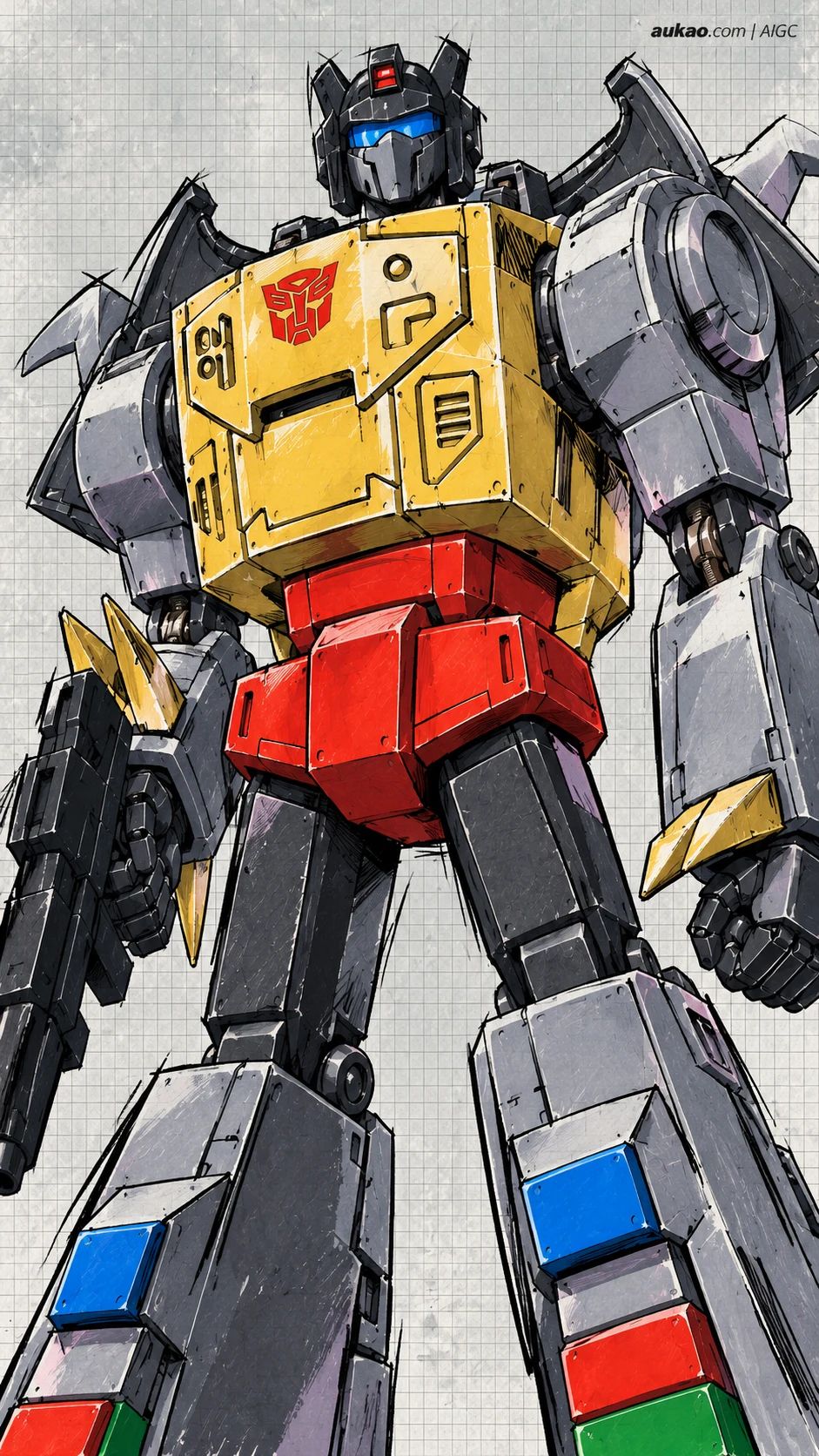
A large yellow chest plate becomes the first visual landmark. Dark joints separate the gray limbs into readable sections, while the red waist introduces a second color block below. The panel lines add texture, but the larger masses establish the figure’s weight.
Open the artwork and reading notes ↗Optimus Prime: looking upward
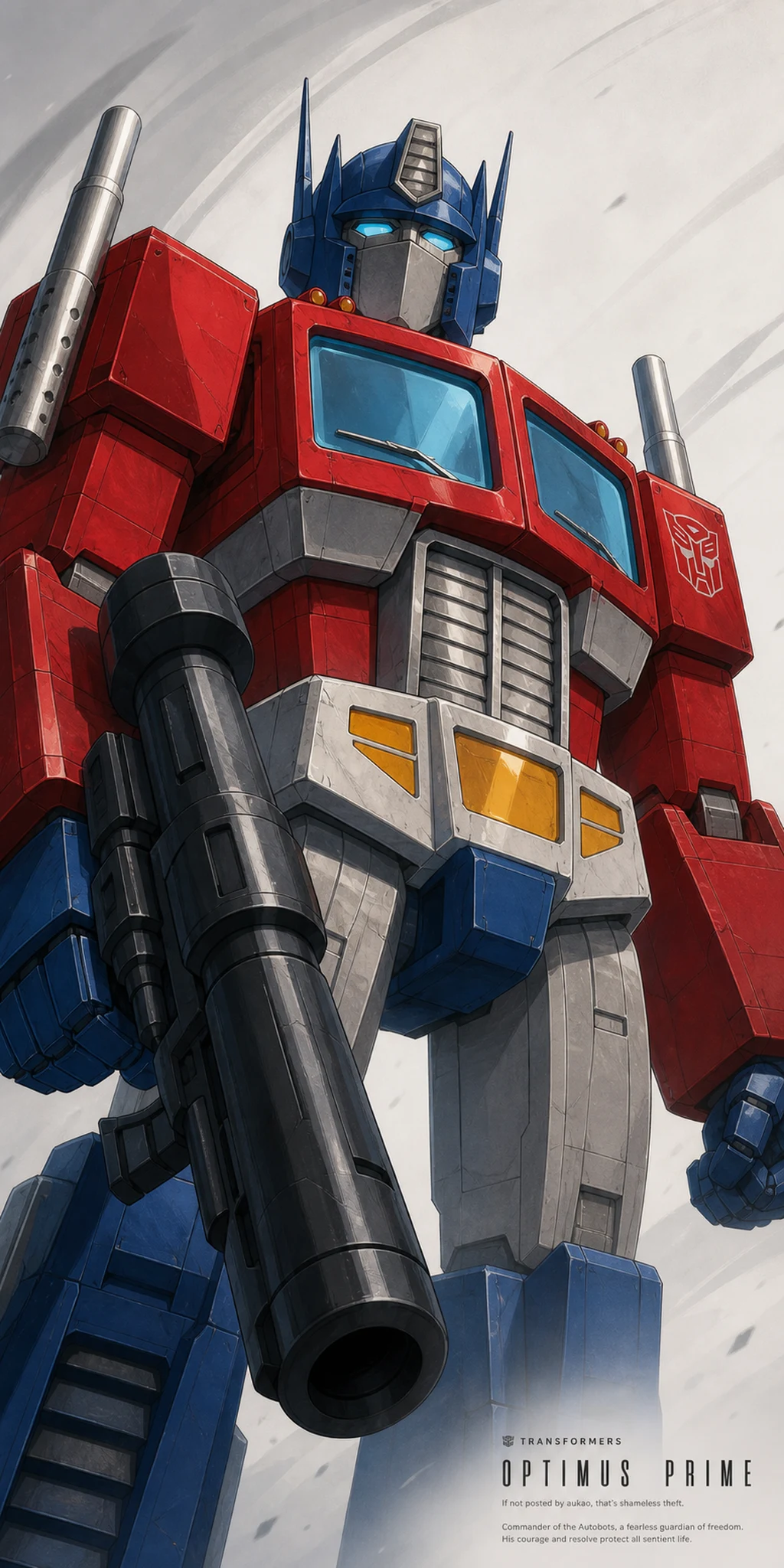
The low viewpoint lets the legs occupy much of the lower frame and places the head above the red chest windows. Softer, darker shading gives this image a different surface treatment from the brighter Dinobot studies. The silhouette remains readable through the large red, blue, and gray areas.
Open the artwork and reading notes ↗Compare the three works
At thumbnail size, compare the yellow chest of Grimlock with the red chest of Optimus Prime. Both provide an immediate visual anchor, but the viewpoint changes how large the surrounding limbs appear. Swoop relies more on its narrow outline and projecting crest. At full size, examine how panel lines meet at elbows, hands, and shoulders. These are AI-generated illustrations, not mechanical blueprints: a convincing surface does not demonstrate that a joint or transformation could function. That distinction is part of looking critically at the work rather than treating detail alone as accuracy.
These notes describe visible features of the finished images. They do not reconstruct prompts, tools, or editing steps for an individual work.
Browse the full collection